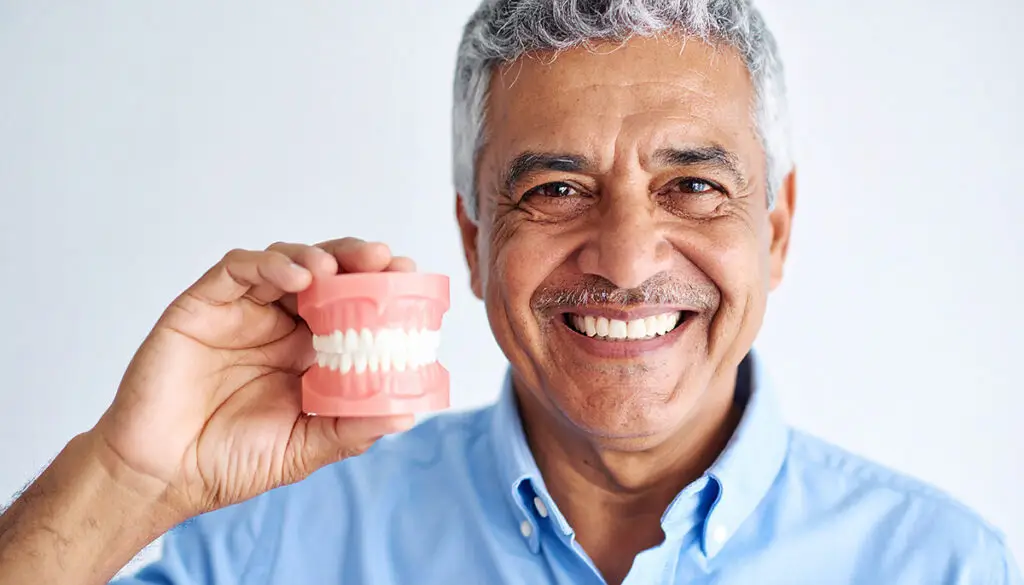
What happens when most or all of the teeth in an upper or lower arch can no longer be maintained? For some patients, traditional dentures provide a removable way to restore an entire row of missing teeth without requiring dental implant surgery.
Smart Dental offers denture options in Richland that include traditional, partial, and implant-supported solutions. Traditional full dentures are designed to replace all teeth in an upper or lower dental arch and rest on the gum tissues rather than attaching to individual natural teeth or dental implants.
Adjusting to dentures involves more than receiving a new set of teeth. The mouth, tongue, cheeks, chewing muscles, and speech patterns all need time to adapt. Understanding how traditional dentures are made and what the adjustment period looks like can make the transition much easier to navigate.
What Are Traditional Dentures?
Traditional full dentures are removable dental prostheses used when all natural teeth in an upper or lower arch are missing.
The denture consists of replacement teeth attached to a base designed to resemble gum tissue. The base rests on the gums and underlying ridge of the jaw.
An upper denture generally covers more of the palate to help provide support and retention. A lower denture is shaped around the tongue and relies on the remaining ridge, surrounding muscles, and fit for stability.
Because traditional dentures are removable, patients take them out for cleaning and according to the wearing schedule recommended by their dentist.
When Might Traditional Dentures Be Considered?
Traditional full dentures may be considered when an entire arch of natural teeth is already missing or when the remaining teeth cannot predictably be maintained.
The decision to remove remaining teeth should be made carefully. Dentists generally prefer to preserve healthy natural teeth when doing so is appropriate.
However, teeth with severe decay, advanced periodontal breakdown, significant fractures, repeated infection, or poor structural support may no longer provide a reliable foundation.
In these situations, treatment planning considers the health of every remaining tooth, the amount of supporting bone, medical history, finances, preferences, and whether implants are desired or appropriate.
How Are Traditional Dentures Different From Partial Dentures?
A partial denture is used when some healthy natural teeth remain. The appliance fills selected gaps while fitting around the existing teeth.
A full traditional denture replaces every tooth in one dental arch.
The designs are therefore quite different. A partial may receive support or retention from natural teeth, while a complete denture primarily depends on the shape of the gum and jaw ridge along with other anatomical factors.
If several healthy teeth remain, removing them solely to create a full denture may not be the best approach. Your dentist evaluates whether those teeth can contribute meaningfully to long-term oral function.
What Is the Process for Getting Traditional Dentures?
Making a well-fitting denture requires more than choosing replacement teeth. The dental team needs detailed information about the gums, jaw relationships, bite, facial proportions, and smile.
Comprehensive Examination
The dentist evaluates the mouth and determines whether existing teeth need treatment or extraction before denture fabrication.
Impressions or Digital Records
Detailed records are created to capture the shape of the gums and dental arch.
Bite Measurements
The relationship between the upper and lower jaws must be recorded carefully so the replacement teeth can be arranged for appropriate function.
Tooth Selection
Replacement teeth can be selected according to size, shape, shade, facial characteristics, and patient preferences.
Try-In or Evaluation
Depending on the denture process, a trial arrangement may be evaluated before final fabrication. This allows the dentist to assess appearance, tooth position, and bite.
Final Delivery and Adjustment
Once the denture is completed, the dentist checks fit, bite, appearance, and pressure areas.
Follow-up adjustments are common because the mouth needs time to adapt.
What Are Immediate Dentures?
Immediate dentures are designed to be placed shortly after remaining teeth are removed so the patient is not necessarily without teeth during the initial healing period.
Because the denture is created before the extraction sites have fully healed, the fit can change as swelling decreases and the gum and bone contours remodel.
As a result, immediate dentures may require adjustments, temporary lining material, relining, or eventual replacement after healing.
Whether an immediate denture is appropriate depends on the patient’s situation and treatment plan.
How Long Does It Take to Get Used to Traditional Dentures?
Most new denture wearers need an adjustment period. The appliance occupies space that the tongue and cheeks are not used to, and chewing forces are transferred differently than they were with natural teeth.
Initially, the denture may feel bulky or unfamiliar. Saliva flow may temporarily increase, speech can sound different, and eating may require more concentration.
These changes do not necessarily mean the denture is incorrect. The muscles and nervous system need time to learn how to function with the appliance.
However, persistent pain, severe sore spots, or significant instability should be professionally evaluated rather than accepted as something you simply have to tolerate.
How Do You Learn to Eat With Dentures?
Start gradually. Softer foods cut into smaller pieces are often easier during the first stage of adjustment.
Try chewing slowly and using both sides of the mouth at the same time when practical. Balanced chewing can reduce the tendency for a denture to tip.
As control improves, additional foods can be reintroduced.
Very hard, sticky, or difficult-to-chew foods may remain challenging for conventional dentures because they do not have the same anchorage as natural teeth or implant-supported restorations.
Your dentist can provide practical suggestions based on how your specific denture fits and functions.
Will Dentures Affect the Way You Speak?
Temporary speech changes are common because the tongue must learn to contact a new surface when forming certain sounds.
Reading aloud, speaking normally, and practicing difficult words can help the muscles adapt.
Most patients become increasingly comfortable as they learn the new tongue positions.
If speech remains difficult after a reasonable adjustment period, the denture may need evaluation for tooth position, thickness, fit, or other factors.
Benefits of Traditional Dentures
- Replaces a full arch of missing teeth: One removable appliance can restore all teeth in an upper or lower arch.
- No implant surgery required: Traditional dentures rest on the gum tissues rather than depending on surgically placed implants.
- Restores visible tooth structure: Replacement teeth can be selected to provide a complete and natural-looking smile.
- Supports everyday function: Dentures can restore useful chewing surfaces and assist with speech after tooth loss.
- Removable for cleaning: The appliance can be removed for thorough hygiene and maintenance.
- Custom designed: Tooth shape, shade, arrangement, and denture contours are planned for the individual patient.
- Can serve patients who are not implant candidates: Traditional dentures remain an option when implant treatment is not desired or appropriate.
Traditional Dentures vs. Snap-In Dentures
Traditional dentures rest on the gums. Snap-in dentures use dental implants as anchors to provide additional retention.
Because implants help stabilize the appliance, snap-in dentures may move less during chewing and speaking.
However, implant-supported treatment involves additional procedures, healing, sufficient bone, and different financial considerations.
Traditional dentures avoid implant surgery and may provide a practical solution for patients who prefer a removable non-implant approach.
Smart Dental provides both conventional and implant-supported denture options so treatment can be selected according to anatomy, health, priorities, and lifestyle.
Traditional Dentures vs. Dental Implants
Dental implants replace tooth roots with implant fixtures placed in the jawbone. Depending on the treatment plan, implants can support individual teeth, fixed restorations, or removable implant-supported dentures.
Traditional dentures do not replace tooth roots and therefore function differently.
If you are healthy enough for implant treatment and want additional denture stability, dental implants in Richland may be worth discussing.
Neither option is automatically appropriate for everyone. Bone anatomy, medical history, oral hygiene, treatment goals, surgical preferences, and budget all contribute to the decision.
Why Do Dentures Become Loose Over Time?
The jawbone naturally changes after teeth are lost because natural tooth roots are no longer present to transfer chewing forces into the bone.
Over time, the ridge supporting a traditional denture may become smaller or change shape.
Since the denture itself does not automatically change along with the mouth, an appliance that once fit well can gradually become less stable.
Normal wear of the denture and changes in bite relationships can also influence fit.
A loose denture may need adjustment, relining, or replacement depending on its age and the amount of change that has occurred.
What Is a Denture Reline?
A denture reline modifies the surface that contacts the gums so it better corresponds with the current shape of the mouth.
Relining can sometimes improve fit when the denture teeth and overall appliance remain in acceptable condition but the supporting tissues have changed.
However, relining cannot correct every problem. A worn, fractured, severely outdated, or poorly positioned denture may need replacement.
Your dentist can determine whether an adjustment, reline, repair, or new denture is the most appropriate solution.
How Do You Clean Traditional Dentures?
Daily cleaning is essential because plaque, food particles, and stains can accumulate on denture surfaces.
Remove the denture carefully and clean it using the methods recommended by your dental team. A denture brush and appropriate denture-cleaning products may be advised.
Avoid extremely hot water because heat can distort certain denture materials.
When handling the appliance, consider cleaning it over a folded towel or basin partly filled with water to reduce the chance of damage if it slips from your hands.
You also need to clean your tongue, gums, palate, and any remaining natural teeth.
Should You Sleep With Traditional Dentures?
Many patients are advised to remove traditional dentures at night so the gum tissues can rest and the appliance can be cleaned thoroughly.
Your dentist will provide recommendations based on your specific situation.
When the denture is out of the mouth, store it according to professional instructions. Proper storage helps maintain the material and prevents accidental damage.
Do You Still Need Dental Visits If You Have No Natural Teeth?
Yes. Dental visits remain important even after all natural teeth in an arch are gone.
The dentist can evaluate the fit and condition of the denture, examine gum and soft tissues, assess changes in the jaw ridge, and look for sore spots or other concerns.
Oral cancer screening and evaluation of the tongue, cheeks, lips, and other tissues also remain relevant regardless of whether natural teeth are present.
In addition, worn dentures can gradually alter bite relationships, so professional monitoring remains useful.
Can Denture Adhesive Fix a Loose Denture?
Denture adhesive may improve retention in some situations, but it should not be used indefinitely to compensate for a denture that no longer fits properly.
If the amount of adhesive needed keeps increasing or the denture moves significantly, schedule an evaluation.
A fit problem may require adjustment, relining, replacement, or consideration of implant-supported options.
What If Dentures Cause Sore Spots?
Some tenderness can occur during the adjustment period, but persistent sores should be evaluated.
Do not attempt to grind or reshape the denture yourself. Removing material from the wrong area can make the fit worse.
Your dentist can identify pressure points and adjust the appliance precisely.
If possible, follow the office’s instructions about wearing the denture before an adjustment visit because visible pressure areas can sometimes help identify exactly where correction is needed.
Questions Patients Ask About Traditional Dentures
Can traditional dentures look natural?
Yes. Denture teeth are available in different shapes, sizes, and shades, allowing the final appliance to be customized according to facial proportions and patient preferences.
Can you eat normally with traditional dentures?
Traditional dentures restore useful chewing function, but they do not provide the same biting force and stability as natural teeth or many implant-supported restorations. Patients generally adapt gradually to the foods they can manage comfortably.
How long do traditional dentures last?
The lifespan varies because denture materials wear and the shape of the mouth changes over time. Periodic evaluation helps determine when adjustments, relining, or replacement are appropriate.
Do traditional dentures require adhesive?
Some patients use adhesive for additional retention, while others do not need it. A denture that requires increasing amounts of adhesive should be evaluated for fit.
Can traditional dentures be changed to snap-in dentures later?
Some patients who begin with conventional dentures may later explore dental implants and implant-supported denture treatment. Whether an existing denture can be modified or a new one is needed depends on the treatment plan and appliance design.
Choose a Denture Plan Built Around Comfort and Function
Traditional dentures remain a practical way to replace a complete arch of missing teeth without implant surgery. Successful treatment depends on accurate measurements, thoughtful tooth arrangement, careful adjustment, and realistic expectations during the adaptation period. Just as importantly, dentures need ongoing maintenance because the mouth continues to change over time.
If you are considering traditional dentures in Richland, WA, Smart Dental at 3200 Duportail St Suite 105 can help you compare conventional dentures, snap-in dentures, and implant-supported options. Call Us Today at (509) 492-2051 to Schedule a Consultation, or Contact Us to request your appointment.