When one tooth is missing, the empty space can affect much more than the appearance of your smile. Depending on its location, the gap may change how you chew, allow neighboring teeth to shift, or make certain foods more difficult to manage. Fortunately, replacing a missing tooth does not always require a removable appliance.
A dental bridge is one option available through restorative dentistry at Smart Dental in Richland. A traditional bridge uses neighboring teeth to support a replacement tooth in the space between them. Because the restoration is fixed in place, patients do not remove it for routine cleaning or while eating.
Dental implants are another common solution for missing teeth, but they work differently. Understanding what a dental bridge is, how it is made, and when it may be considered can help you compare tooth replacement options more confidently.
What Is a Dental Bridge?
A dental bridge is a fixed restoration designed to replace one or more missing teeth. The replacement tooth, often called a pontic, fills the open space while neighboring teeth or other dental structures provide support.
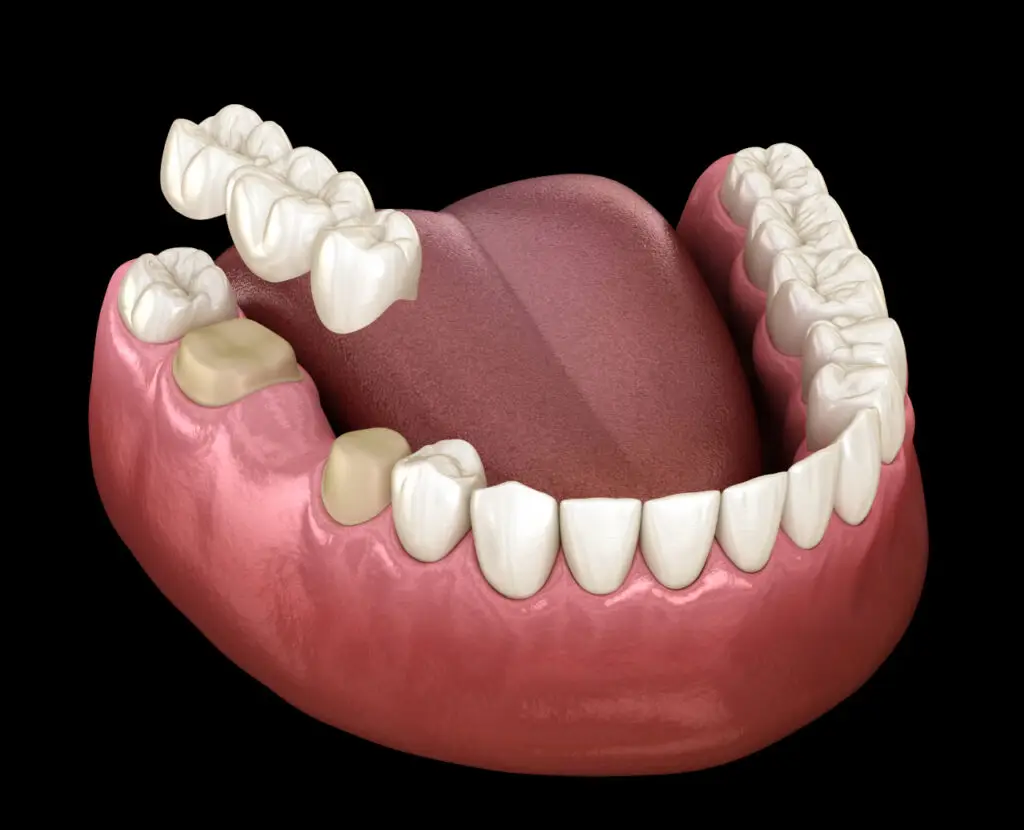
In a traditional bridge, the teeth on either side of the gap are prepared for dental crowns. Those crowns are connected to the replacement tooth, creating a single restoration that literally bridges the missing space.
Once the bridge is securely placed, it remains in the mouth during normal eating, speaking, brushing, and sleeping.
The design must fit precisely because a dental bridge affects several parts of the mouth at once, including the supporting teeth, bite, replacement tooth, gum contact, and neighboring spaces.
Why Replace a Missing Tooth?
Some patients assume that a missing back tooth does not matter because it cannot easily be seen. However, teeth function together as part of a complete bite.
When a tooth is lost, neighboring teeth may gradually lean or drift toward the open space. The tooth in the opposite arch may also move farther into the gap because its normal biting partner is gone.
These changes do not occur at the same speed for every patient, and some spaces remain relatively stable for long periods. Still, replacing a missing tooth can help restore a more complete chewing surface and maintain the intended arrangement of the dental arch.
A bridge can also restore a visible missing tooth, support clearer speech in certain situations, and make it easier to distribute chewing forces across multiple teeth.
How Does a Traditional Dental Bridge Work?
A traditional bridge generally involves at least three connected units when replacing one missing tooth.
The teeth immediately beside the gap serve as supporting teeth. These teeth are prepared to receive crowns. Between those crowns is the artificial replacement tooth.
The completed restoration is fabricated as a connected structure. When the crowns are secured to the supporting teeth, the replacement tooth is held over the missing-tooth space.
For this approach to work well, the supporting teeth need to be strong enough to handle the additional demands placed on them. Gum health and bone support are also important.
What Happens When You Get a Dental Bridge?
The exact process depends on the condition of your teeth and the type of bridge being made. However, several steps are common.
Evaluation and Treatment Planning
The dentist examines the missing-tooth area, supporting teeth, gums, and bite. Dental imaging may be used to evaluate roots, bone, and nearby structures.
Preparing the Supporting Teeth
For a traditional bridge, the neighboring teeth are shaped so crowns can fit over them. Local anesthetic is typically used to keep the treatment area comfortable.
Creating Detailed Records
Digital scans or impressions may be taken so the bridge can be designed to fit your mouth. Bite information and tooth shade may also be recorded.
Temporary Protection
If the final bridge is being made outside the office, a temporary restoration may be used to protect the prepared teeth while the final bridge is created.
Placing the Final Bridge
At the final appointment, the dentist evaluates the bridge’s fit, bite, appearance, and contact with neighboring teeth. Once the restoration is satisfactory, it can be secured in place.
How Many Visits Does a Dental Bridge Require?
Many traditional dental bridges require more than one appointment because the supporting teeth must be prepared and the custom restoration must be fabricated and checked.
The exact timeline can vary depending on the type of bridge, dental laboratory process, condition of the supporting teeth, and whether other treatment is needed first.
For example, a supporting tooth with active decay may need treatment before it can predictably support a bridge. Likewise, gum inflammation may need to be controlled to improve the health of the tissues surrounding the restoration.
Your dentist can explain the expected sequence after completing the examination.
Dental Bridge vs. Dental Implant
Both bridges and implants can replace missing teeth, but they use different forms of support.
A traditional bridge relies on neighboring teeth. A dental implant uses a small implant placed within the jawbone as an independent foundation for a replacement tooth.
One advantage of an implant is that healthy neighboring teeth may not need to be prepared solely to support the replacement tooth. However, implant treatment involves a surgical procedure and requires appropriate bone, healing, and treatment time.
A bridge may be particularly worth discussing when neighboring teeth already need crowns or substantial restorative treatment. In that situation, using those teeth as part of the bridge may fit naturally into the overall restorative plan.
Smart Dental also provides dental implants in Richland, allowing patients to discuss both approaches based on their actual oral health.
Dental Bridge vs. Partial Denture
A conventional partial denture is removable, while a traditional dental bridge is fixed in place.
Partial dentures may be useful when several teeth are missing in different parts of the same dental arch. A bridge is often more localized and is commonly used when one tooth, or a limited number of adjacent teeth, need replacement.
Because a bridge remains in the mouth, cleaning techniques differ from those used with removable dentures. Patients need to clean underneath the replacement tooth rather than simply removing the appliance.
The appropriate choice depends on the number of missing teeth, health of remaining teeth, bite, cost considerations, patient preferences, and long-term restorative plan.
Benefits of Dental Bridges
- Replaces missing teeth: A bridge fills an open space with a functional artificial tooth.
- Fixed in place: Traditional bridges remain in the mouth during eating, speaking, and normal daily activities.
- Restores chewing surfaces: Replacing a missing tooth can improve the distribution of chewing forces.
- Supports smile appearance: Replacement teeth can be designed to coordinate with neighboring natural teeth.
- Helps maintain tooth position: Filling a gap can reduce opportunities for neighboring teeth to drift into the space.
- No implant surgery required: A conventional bridge provides fixed tooth replacement without placing an implant in the jaw.
- Can restore neighboring teeth at the same time: When adjacent teeth already need crowns, a bridge may address several restorative needs within one treatment plan.
How Do You Clean Under a Dental Bridge?
A bridge cannot simply be cleaned like an isolated natural tooth because the replacement tooth is connected to the supporting crowns. Regular floss cannot always pass directly down between each connected unit.
Instead, patients can use floss threaders, specialized floss, interdental brushes, or other tools recommended by the dental team to clean beneath the replacement tooth and around the supporting teeth.
This daily cleaning is important. Plaque left around the edges of the crowns can contribute to tooth decay or gum inflammation, even though the bridge itself cannot develop a cavity.
Your dental hygienist can demonstrate the technique and help identify which cleaning tools work best for the design of your bridge.
Can a Tooth Under a Bridge Get a Cavity?
Yes. The crowns that support a bridge cover portions of the natural teeth, but those teeth remain biologically active underneath.
Decay can develop near the edge where the crown meets the natural tooth, particularly if plaque consistently remains in the area.
This is one reason excellent oral hygiene matters for bridge longevity. Brush carefully around the crown margins and clean beneath the bridge every day.
Regular dental examinations also allow the dentist to monitor the supporting teeth and surrounding tissues for changes that may not cause symptoms initially.
How Long Does a Dental Bridge Last?
Dental bridges are designed for durability, but no dental restoration should be considered permanent.
Longevity can depend on the health of the supporting teeth, gum health, bite forces, oral hygiene, grinding habits, material selection, and the size and location of the bridge.
A well-maintained bridge may function for many years. However, the bridge can require replacement if a supporting tooth develops decay, the restoration fractures, gum or bone support changes, or another dental problem affects the area.
Protecting the supporting teeth is therefore just as important as protecting the bridge itself.
What Does a Dental Bridge Feel Like?
A new bridge may feel unfamiliar for a short period because the tongue, bite, and chewing muscles are adapting to a restored tooth where a gap previously existed.
Once properly adjusted, the bridge should become a normal part of everyday function.
If your bite feels uneven, one tooth hits before the others, or the bridge remains uncomfortable, contact the dental office. Bite adjustments can sometimes improve comfort and reduce unnecessary stress on the restoration.
Can You Eat Normally With a Dental Bridge?
Patients can generally return to a varied diet after adapting to a properly placed dental bridge. However, very hard or sticky foods can place unnecessary stress on crowns and other restorations.
Using teeth to crack hard objects, chew ice, open packages, or bite nonfood items is also risky for both natural teeth and dental restorations.
If you grind or clench your teeth, tell your dentist. Excessive bite forces may affect the lifespan of a bridge, crown, filling, or natural tooth.
Who Is a Good Candidate for a Dental Bridge?
A good candidate typically has a missing tooth or limited missing-tooth space with neighboring teeth that can predictably support the restoration.
The dentist also evaluates gum health, bone support, bite forces, oral hygiene, existing restorations, and the long-term outlook of the supporting teeth.
A bridge may be less appropriate if the neighboring teeth are weak, mobile, severely compromised, or poorly positioned for support.
In those cases, an implant, partial denture, or another treatment approach may make more sense.
Questions Patients Ask About Dental Bridges
Does getting a dental bridge hurt?
Local anesthetic is generally used when supporting teeth are prepared, helping keep the treatment area comfortable. Temporary tenderness can occur afterward in some situations.
Can a dental bridge replace more than one tooth?
Some bridges can replace more than one adjacent tooth, but the longer the span becomes, the more important support and bite forces become. Your dentist must evaluate whether the proposed bridge is appropriate.
Can you remove a fixed dental bridge at home?
No. A traditional fixed bridge is secured to its supporting teeth and is not designed for patient removal.
Can a dental bridge look natural?
Modern bridge materials can be selected and shaped to coordinate with neighboring teeth. The final appearance depends on the location, available space, gum contours, tooth color, and treatment plan.
Do you floss around a dental bridge?
Yes. Daily cleaning beneath and around the bridge is important. Floss threaders, specialized floss, and interdental cleaning tools can help reach areas beneath the replacement tooth.
Restore the Space With a Treatment Designed for Your Bite
A dental bridge can provide fixed tooth replacement without requiring a removable appliance. However, successful bridge treatment depends on more than simply filling the visible gap. The supporting teeth, gums, bite, cleaning access, and long-term restorative needs all need to work together.
If you are considering a dental bridge in Richland, WA, Smart Dental at 3200 Duportail St Suite 105 can help you compare fixed bridges, implants, and other tooth replacement options. Call Us Today at (509) 492-2051 to Schedule a Consultation, or Contact Us to request an appointment.